


Before she left the office on July third, my boss Amy said something that stuck. Celebrate independence. Yours or someone else's.
I came home in October after twenty-six years inside. This was my first Fourth of July as a free man. Her line kept circling back to me all day.
I didn't want fireworks. I wanted my people.
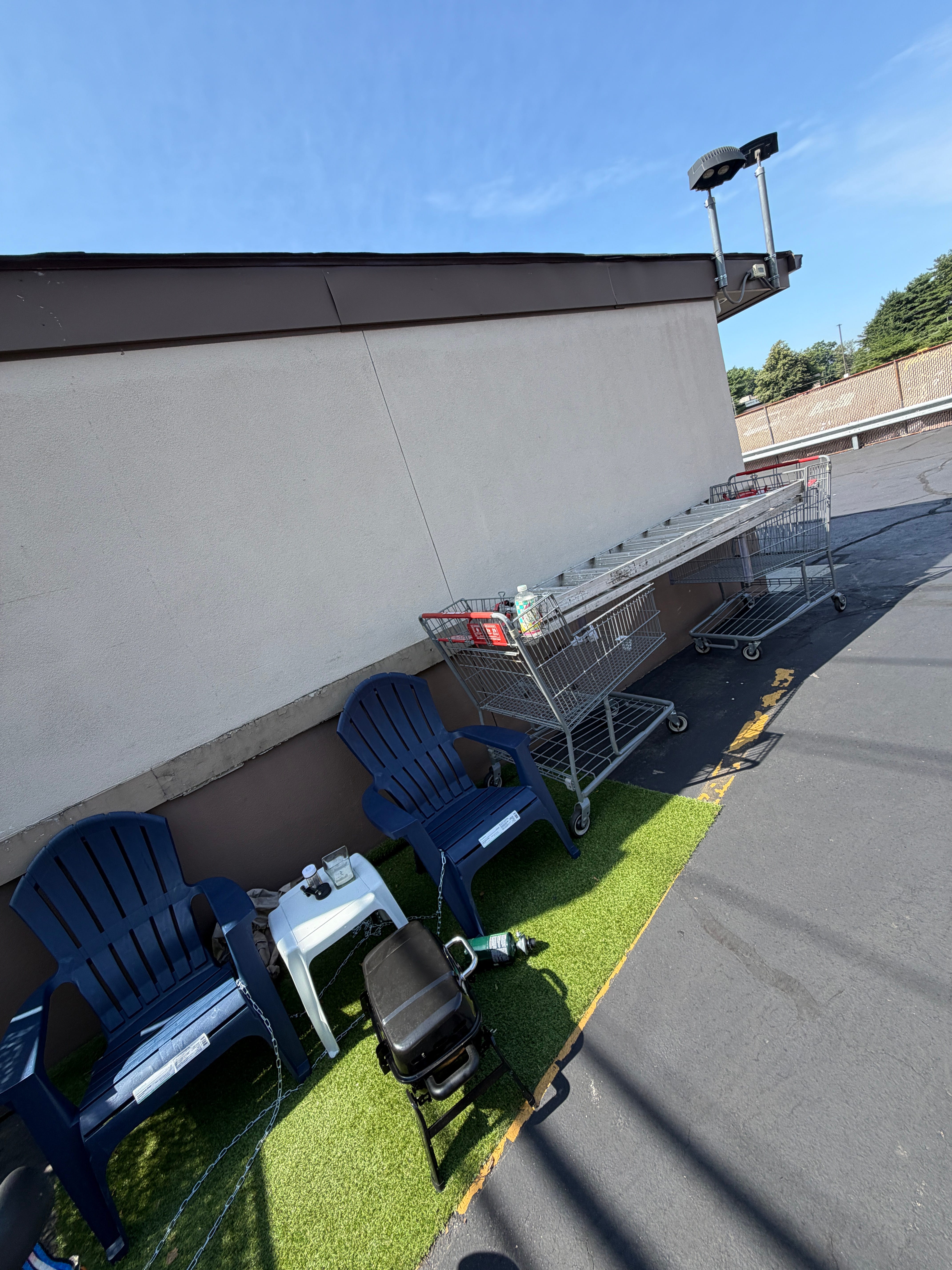
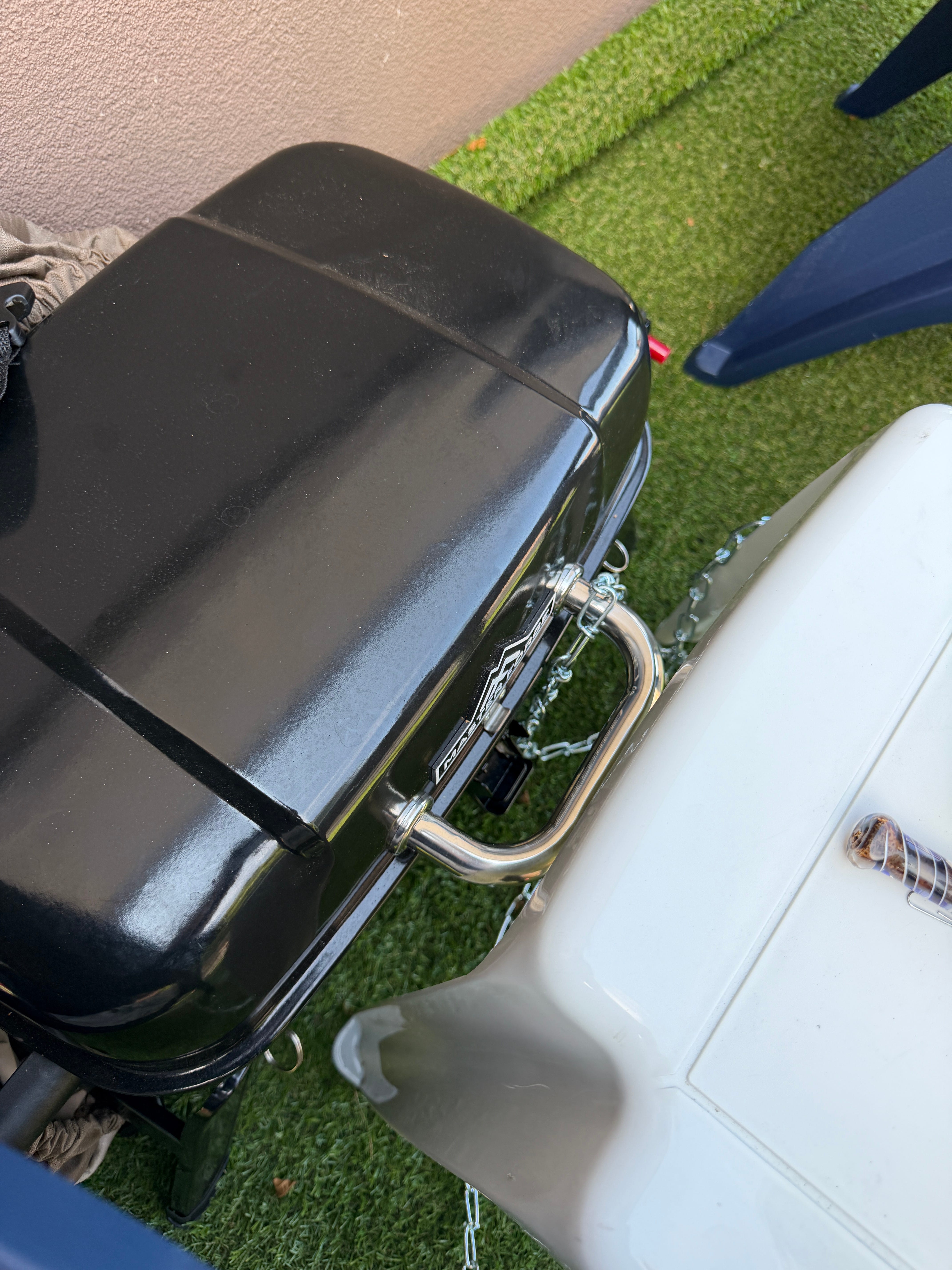
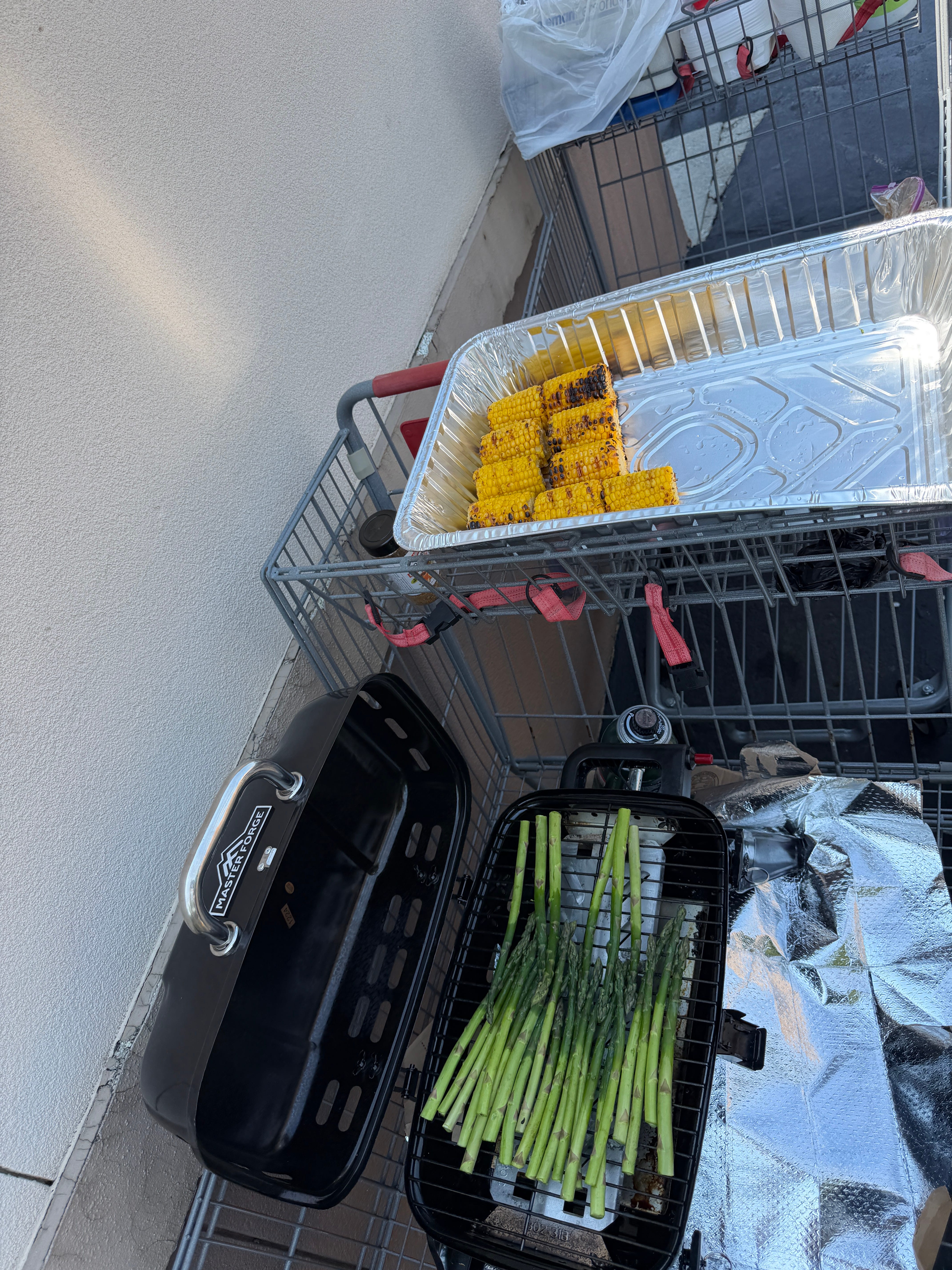
Marty came over first. I did time with him at Auburn Prison. Then Fame showed up, a guy I know from being out here (he and Marty knew each other from inside), and Ronnie, whose father I met when we were training service dogs in Fishkill. Four of us on the little patch of “grass” behind my building, where I built what I'm calling a lanai. Two plastic Adirondack chairs, a green carpet, a small table, and a mini grill I keep in a shopping cart. Everything chained down and padlocked, lest it walk away.
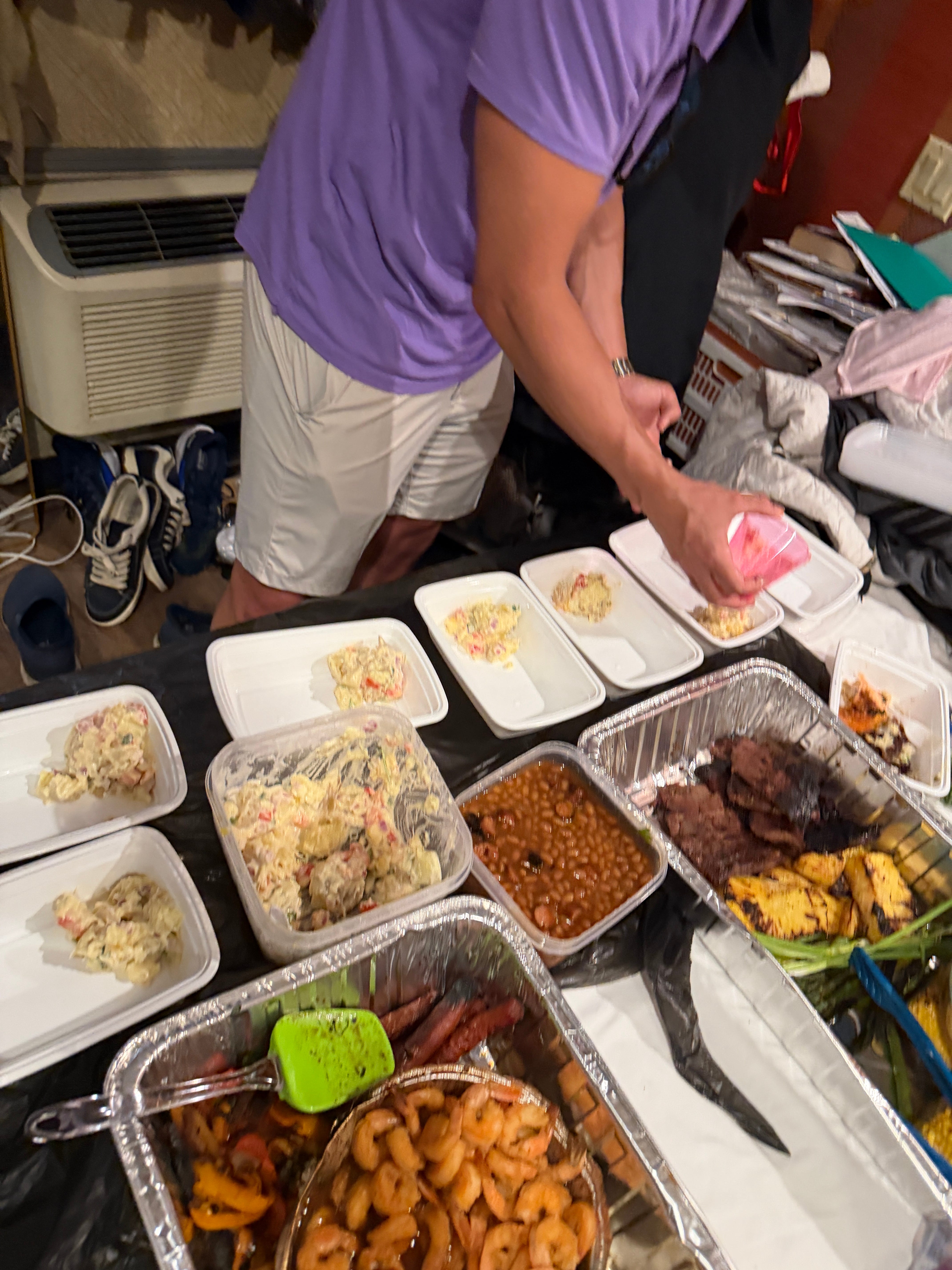
I cooked for hours. Corn, asparagus, potato salad. Sea bass blackened with dry seasoning. Salmon with lemon and cilantro. Shrimp in a pineapple glaze. Skirt steak in soy, miso, and garlic. Chicken teriyaki that I glittered with sesame seeds. All of it out of a ninety-nine cent store run and an Amazon order, stretched with SNAP benefits until it worked.
It worked. Marty helped me portion it into clamshells, seven trays, for my neighbors, for Elena the housekeeper, and for people in the motel. I did some version of this on most holidays inside too. Cooking for people has always felt like the best way to mark a day. The difference now is nobody had to smuggle anything, trade anything, or time it around a count.
I live in that motel right now, a social service placement, and some days it sits heavy on me. But carrying a warm plate down a hallway and knocking on a stranger's door is not a small thing after decades of being told exactly when and what to eat. Nobody in that hallway asked where I'd been. They just took the plate.
At some point Fame and Ronnie got to talking, and Fame started connecting him with vocational leads, real numbers to call, unprompted, because that's what happens when men who've done real time end up in the same yard again, except this yard has a grill in it instead of a gun tower.
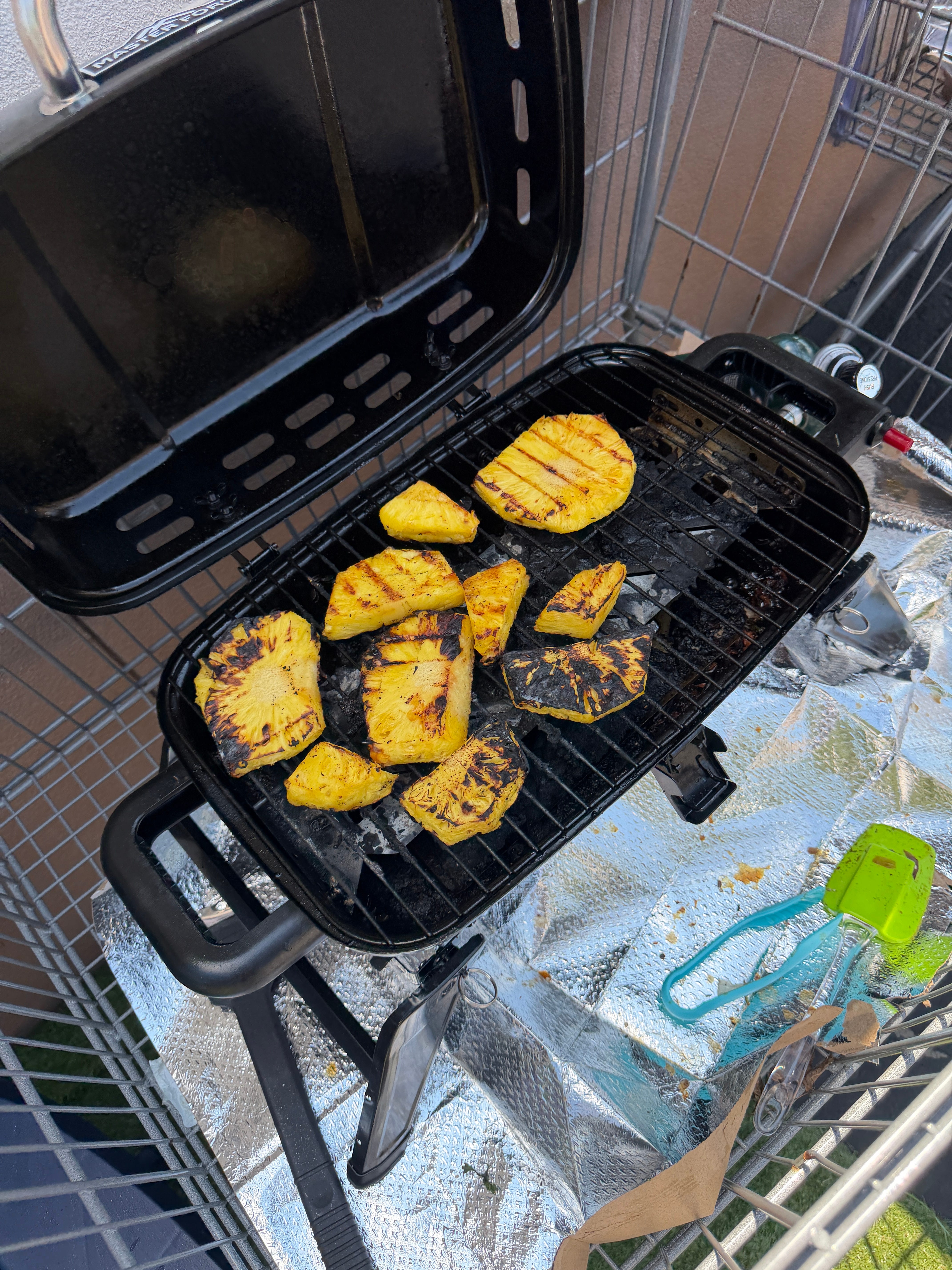
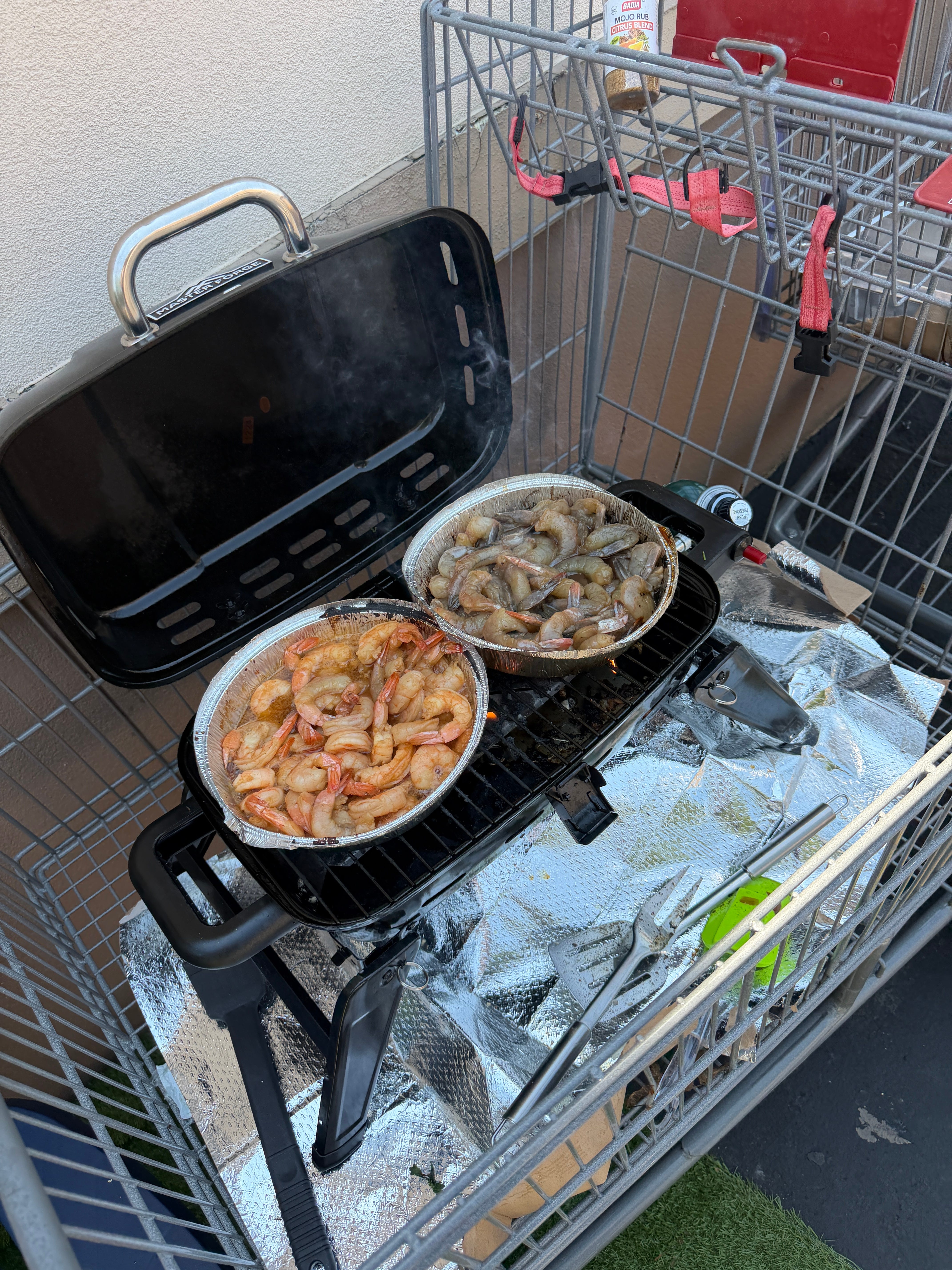
Between the three of us, Marty, Fame, and me, we're carrying nearly seventy years of prison. Ronnie carries it differently, the way a son does. There was no bickering, no posturing. Just a good day, plates going around, somebody always getting up to flip something on the grill. And the weather held.
I got ten thousand steps in without leaving my own little corner of the world. The only time I crossed the street all day was to buy two overpriced bags of ice.
Inside, ice was a production. It came down from the kitchen on a truck, half of it melting and spilling across the mess hall dock before it landed, guys sweating to get it inside before it turned to water. Eventually the fellas at Fishkill got an ice machine installed in the house, and that felt like a miracle at the time. Here, I just walked across the street.
Mike called from Fishkill. Fifteen minutes, timed and monitored. It was so good to hear his voice. A few minutes later Sway called too, out now himself, and I patched the two of them together so they could talk to each other for once. That meant the world. Then the writer Phillip Vance Smith called from North Carolina, doing life without parole, and we made a whole interview out of it, him telling me about the heat and the joke of an air conditioning unit that barely does the job. He laughed about it. I did too. Then I sat with it after we hung up, because his twenty minutes ran out and mine didn't.
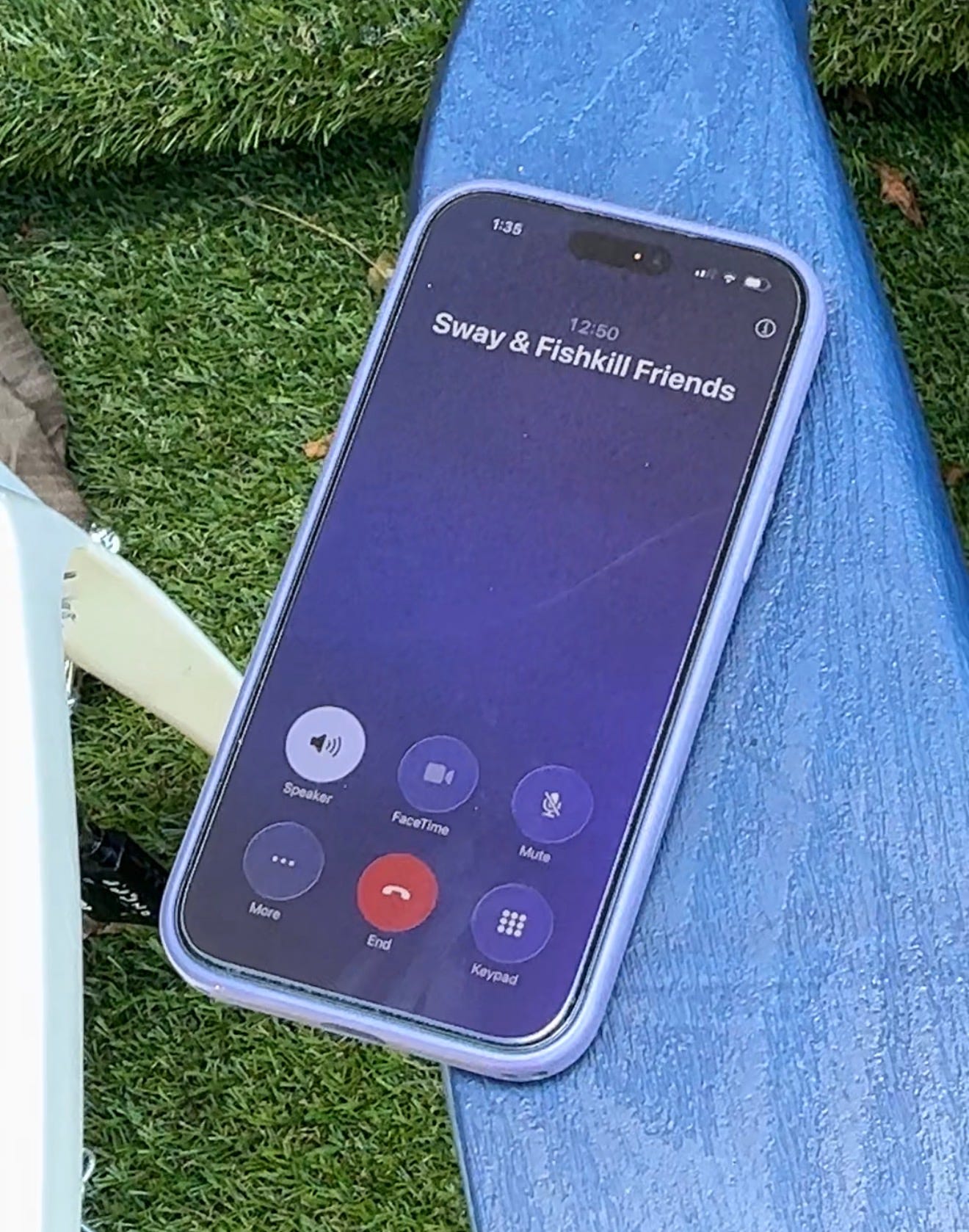
Because that's the other half of this day. I'm out. Some of the men I love most in this world are not. Mike ate the same thing every one of New York's thirty thousand prisoners ate that day: two hot dogs, two hamburgers, potato salad in a cup, wax beans, a grape drink, an ice cream cup, the same bad dinner, statewide, while I was searing salmon in lemon and cilantro. Phill ate whatever they served him in North Carolina. Neither one of them got a plate of what I cooked, and there was nothing I could do about that. I keep coming back to the fact that they call it a holiday menu, like anybody in there had a choice. That doesn't cancel the joy of the barbecue, the food, Fame lining up work for Ronnie. It just sits right next to it, the way it always does.
My boss told me to celebrate independence, mine or someone else's. I did both. Mine with a grill in a shopping cart and seven clamshells of food. Theirs by accepting every call that came through, so they knew somebody out here was thinking about them.
Next year, more chairs.
---
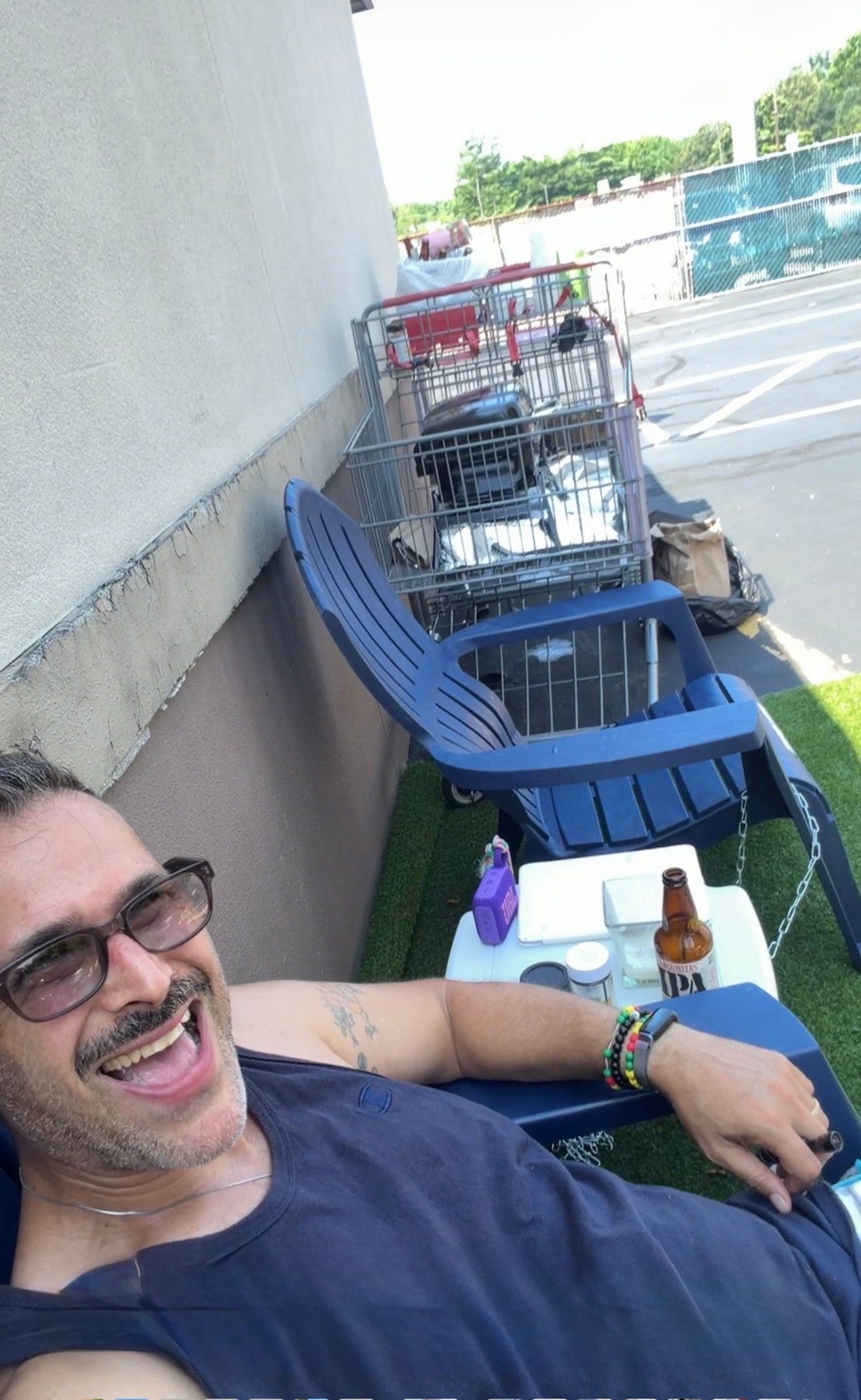
Adam Roberts came home in October 2025 after 26 years incarcerated in New York State. He writes about prisons, art, and reentry at The Squeeze Machine on Substack.
Thanks for your heart, man. This year was new independence here too and the food... yeah, the food was central. 🖤
The way you lived this day and then wrote it down is exactly the kind of story so many of our families and loved ones need to see in the world.
What stays with us most is how you hold both sides of Amy’s line at once: “celebrate independence, yours or someone else’s”. You’re out there with a grill in a shopping cart, ten thousand steps without leaving your corner, salmon and skirt steak stretched with SNAP and ingenuity, and at the same time you’re taking every call, patching brothers together, sitting with the truth that their twenty minutes runs out and yours doesn’t. The joy and the ache sit right next to each other, and you refuse to drop either one.
For the kids and caregivers we walk alongside — many of them with fathers or sons still inside — this is the kind of “first Fourth” that gives real hope. Not a fairytale of everything being fixed, but a life moving forward, still tethered to the men you love, still cooking for “your people”, still turning a motel placement into a lanai and a yard where work gets lined up instead of time. The image of clamshells going down the hallway, plates handed to neighbors who don’t ask questions, is its own small revolution after decades of being told exactly when and what to eat.
Our work at the Appleberry Prison Foundation is rooted in these exact intersections — families on the outside carrying the weight of someone’s sentence, men and women coming home after long bids, kids trying to make sense of what “independence” means when their parent is still eating the holiday menu behind a wall. Reading pieces like this helps them see that rebuilding is possible, that staying connected matters, and that there are people out here who understand what it means to celebrate your own freedom without forgetting who’s still locked down.
Thank you for telling this day with such care. We’d be honored to stay in conversation with you and keep learning from the ways you’re stitching together inside and outside, one plate and one phone call at a time. 🧡